Paid Acquisition Architecture
Meta vs Google Ads for peptide brands: channel comparison & strategy.
Choosing between Meta Ads and Google Ads is one of the most consequential strategic decisions an e-commerce research operator will make. While both platforms provide massive commercial scale, they represent fundamentally opposite buyer mechanics, algorithmic review triggers, and technical requirements. Google captures active, high-intent procurement queries through Search, while Meta drives scalable brand discovery and retargeting through visual laboratory storytelling.
Direct Channel Comparison (40–60 words)
Comparing Meta vs Google Ads for research peptide companies reveals distinct channel strengths: Google captures immediate high-intent buyers searching for analytical standards but carries strict destination crawler scrutiny, while Meta provides superior scaling elasticity through visual educational storytelling. Both platforms require dedicated, isolated landing pages to maintain permanent policy compliance.
Technical Evaluation
Paid acquisition channel comparison matrix.
An objective comparison of channel mechanics, policy enforcement points, creative requirements, and conversion dynamics across Meta and Google Ads.
| Evaluation Factor | Meta Ads (Facebook & Instagram) | Google Ads (Search & Performance) |
|---|---|---|
| Buyer Search Intent | Passive discovery & visual demand generation. Users do not search for compounds; ads interrupt feeds through educational, laboratory-focused storytelling. | Active commercial demand capture. Searchers actively enter specific chemical compound names, CAS identifiers, or purity requirements into Google Search. |
| Primary Policy Vulnerability | Meta Advertising Standards on Drugs & Pharmaceuticals. Triggered by clinical imagery, syringe visuals, human silhouettes, or therapeutic claims in copy. | Google Ads Healthcare and Medicines Policy (Unapproved Substances). Automated destination crawlers scan landing page text and code for prescription nomenclature. |
| Enforcement Mechanism | Multimodal machine-learning classifiers evaluating creative video frames, static images, captions, audio tracks, and user negative feedback signals. | Automated Document Object Model (DOM) crawlers and headless browser rendering that inspect the full text and linked content of destination URLs. |
| Creative Assets Required | Rich visual assets: 3D laboratory vial renders, HPLC purity workflow diagrams, neutral chemical structure vectors, and motion graphic explainers. | Concise, high-relevance text ads with exact-match negative keyword lists filtering out human-use terms (dosage, reconstitution, cycle, injection). |
| Landing Page Architecture | Standalone educational landing routes (/go/meta-ads) emphasizing purity testing, Certificates of Analysis, and institutional credibility. | Isolated technical specification pages (/go/google-ads) highlighting laboratory supply standards, with zero consumer checkout triggers on the entry page. |
| Server-Side Attribution | Meta Conversions API (CAPI) sending purchase events directly from server to server, bypassing browser ad-blockers and Safari ITP tracking restrictions. | Google Ads Enhanced Conversions hashing first-party conversion data to preserve measurement accuracy for Search and Performance Max campaigns. |
| Traffic Velocity & Scaling | Rapid audience expansion potential. Once compliant creative angles stabilize, budgets can scale through broad interest clusters and retargeting pools. | Strictly bounded by actual search volume. High conversion efficiency from active searchers, but scaling is constrained by commercial keyword search queries. |
| Average Conversion Window | Multi-touch consideration journey (3 to 14 days). First-time visitors typically consume educational content before returning to complete orders. | Short, immediate transaction cycle (same session to 48 hours). Laboratory buyers search with active procurement intent and verified purchase orders. |
Platform Policy vs Legal Distinction: Neither Meta nor Google Ads universally permits peptide advertising. Both networks operate under private contractual acceptable-use policies that are fundamentally distinct from federal statutory labeling requirements. Compliant Research Use Only (RUO) positioning does not guarantee campaign approval or permanent account uptime. All campaigns require dedicated architectural isolation to withstand ongoing automated platform review.
Creative Engineering
Compliant visual formats vs text search assets.
How visual asset production differs across networks. Meta requires non-clinical visual stopping power, while Google relies on concise text relevance and negative keyword defense.

Static Technical Diagram
High-contrast vector molecular diagrams and analytical purity highlights designed to halt feed scrolling without clinical body imagery.

HPLC Testing Sequence
Multi-card sequence walking researchers through testing standards, Certificate of Analysis verification, and laboratory cold-chain packaging.
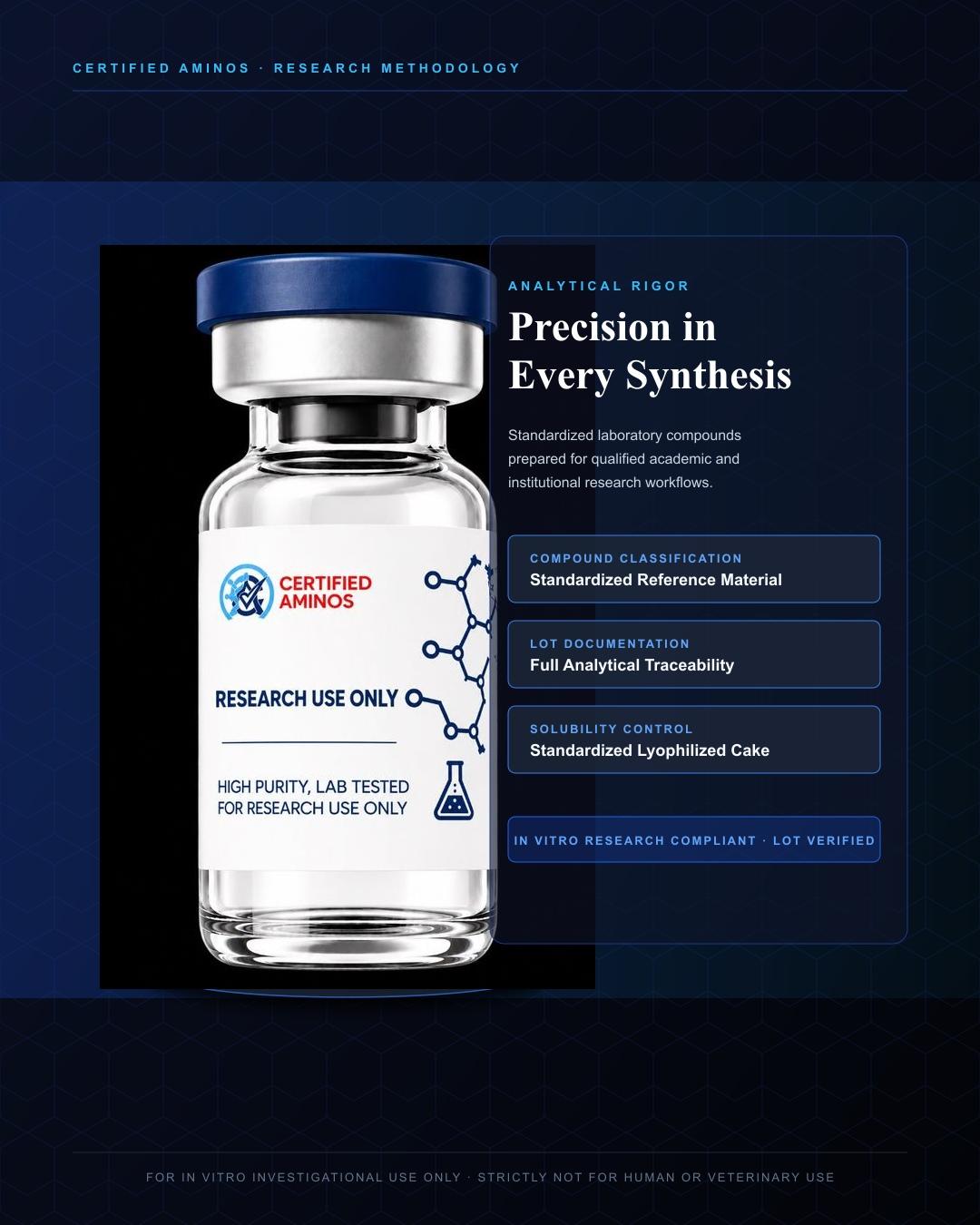
Neutral Scientific Staging
Studio-lit laboratory glassware and analytical instrumentation demonstrating supplier legitimacy under strict advertising review standards.
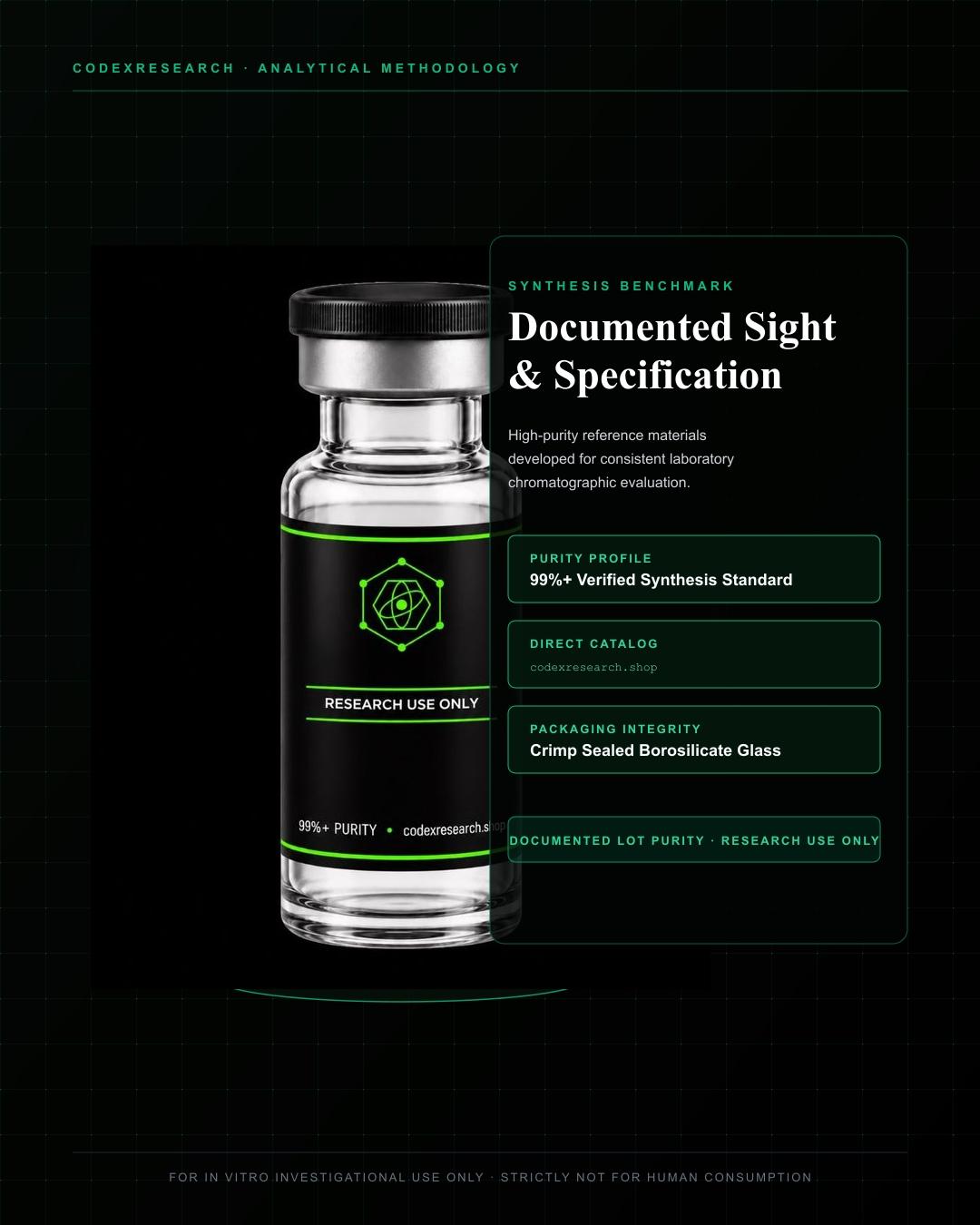
Institutional Credibility
High-resolution laboratory packaging photography paired with batch documentation cards, supporting transparent /go/* landing funnels.
Reference creative compositions developed to demonstrate compliant non-clinical laboratory staging. Sample assets do not constitute universal approval guarantees.
Funnel Topology
Why dedicated /go/* landing routes protect your core catalog.
Directing paid ad traffic straight to an e-commerce catalog is the most frequent cause of account termination on both networks. Here is how transparent funnel architecture solves it.
Ads Linking to E-Commerce Storefronts
When an ad destination URL points directly to an online store catalog, platform crawlers scan the entire Document Object Model (DOM), related product carousels, customer reviews, and category archives. If any compound name or user review mentions clinical terminology, automated classifiers apply account-level strikes for Unapproved Substances or System Circumvention.
- ✕Crawler scans full multi-compound inventory
- ✕Uncontrolled customer reviews trigger policy strikes
- ✕Domain-level ban disrupts all organic and paid traffic
Dedicated /go/* Educational Destinations
Dedicated /go/* destinations (such as /go/meta-ads and /go/google-ads) present verified corporate credentials, HPLC batch testing standards, and institutional research disclosures in full transparency. There is zero cloaking or IP redirection: the exact page viewed by human users is rendered to platform crawlers, proving strict non-clinical laboratory supply positioning.
- 100% transparent: identical HTML for crawlers and users
- Zero consumer checkout triggers or clinical keywords
- Protects primary brand domain from cascading account strikes
Server-Side Measurement
Attribution engineering: Meta CAPI vs Google Enhanced Conversions.
Modern ad delivery depends on high-integrity conversion signals. Here is how server-to-server tracking preserves attribution under Safari ITP and ad-blockers.
Server-to-Server Event Pipeline
Standard client-side browser pixels lose 20% to 40% of conversion data due to iOS App Tracking Transparency (ATT), Safari Intelligent Tracking Prevention (ITP), and ad-blocking extensions. By piping checkout purchase events directly from your Next.js server to Meta's Graph API, CAPI restores signal density, enhances audience match quality, and stabilizes ROAS optimization algorithms.
Primary Function: Redundant server-side event transmission.
Data Security: First-party hashed parameters (SHA-256).
Hashed First-Party Signal Matching
Google Enhanced Conversions supplements standard conversion tags by securely capturing hashed first-party customer information (such as email addresses or phone numbers) provided during checkout. Google matches these cryptographic hashes against signed-in Google accounts, accurately attributing conversions across Search, YouTube, and Performance Max without relying on third-party tracking cookies.
Primary Function: Cross-device first-party account matching.
Data Security: One-way SHA-256 cryptographic hashing.
Budget Planning
Phased budget allocation framework for research brands.
How to distribute media spend across channels as catalog inventory and operational compliance mature. A realistic, disciplined progression.
Phase 1: High-Intent Search Validation (Google Ads)
Deploy conservative exact-match Search campaigns targeting verified laboratory reagent terms. Establish negative keyword boundaries to block human-consumption queries. Validate baseline conversion rates and order values before expanding into paid social.
Phase 2: Visual Discovery & Retargeting (Meta Ads)
Introduce Meta Paid Social utilizing pre-cleared scientific creative assets. Direct traffic to dedicated /go/meta-ads educational destinations. Activate Meta Conversions API (CAPI) server events to retarget search visitors and re-engage abandoned checkouts.
Phase 3: Omnichannel Scale & Audience Clusters
Scale top-of-funnel reach through lookalike audience segments on Meta while maintaining defensive exact-match dominance on Google Search. Continuous negative keyword scrubbing and regular landing page policy inspections prevent unexpected crawler flags.
Direct Answers
Frequently asked questions about Meta and Google Ads.
Clear, objective answers to common acquisition and policy questions encountered by research biochemical brands.
Do Meta or Google Ads universally permit peptide advertising?
No. Neither platform universally permits peptide advertising. Google's Healthcare and Medicines policy and Meta's Drugs and Pharmaceuticals standards strictly prohibit promoting prescription drugs, unapproved substances, and therapeutic outcomes. Campaigns are only viable through transparent, strictly non-clinical Research Use Only positioning on dedicated educational landing pages.
Why does Google Ads have higher policy friction for unapproved substances?
Google Ads deploys automated destination crawlers that parse the complete Document Object Model (DOM) of your landing URL. If the crawler detects unapproved pharmaceutical terms or clinical trial keywords anywhere on the destination, the ad is disapproved for Unapproved Substances, and repeated strikes lead to account suspension for Circumventing Systems.
What is the purpose of dedicated /go/* landing page routes?
Dedicated /go/* landing routes provide transparent, compliant destination architecture specifically formatted for advertising review. Unlike full e-commerce catalogs that feature extensive chemical inventories, /go/* pages highlight company credentials, HPLC documentation, and batch quality standards without consumer cart triggers, ensuring complete alignment with advertising network policies.
How do Meta CAPI and Google Enhanced Conversions differ?
Meta Conversions API (CAPI) sends conversion events directly from your server to Meta, preserving attribution when browser ad-blockers or Safari ITP prevent pixel firing. Google Enhanced Conversions hashes first-party customer data (such as email) to match ad interactions accurately across Google Search, YouTube, and Performance Max campaigns.
What creative assets are prohibited on Meta Ads for research brands?
Meta prohibits creatives displaying syringes, injection vials being handled for administration, human body silhouettes demonstrating muscle growth or fat loss, medical crosses, prescription pill bottles, and before-and-after imagery. Compliant creatives must focus exclusively on neutral laboratory glassware, chemical structure diagrams, and analytical instrumentation.
How should an early-stage research brand allocate its advertising budget?
Early-stage brands typically allocate 70% of initial ad spend to Google Search to capture commercial buyers with active chemical procurement needs. The remaining 30% supports Meta Ads to test visual laboratory creative angles, establish baseline brand recognition, and build server-side retargeting pools for prospective buyers.
Explore Dedicated Vanta Foundry Paid Media Services:
Paid Acquisition Audit
Compare & Plan Your Paid Channel Strategy
Schedule a technical consultation to determine whether Meta, Google, or a diversified acquisition mix provides the safest and most profitable scaling path for your catalog.
Request Paid Media Strategy Consultation
Tell us about your active ad accounts, catalog scope, and scaling targets. Our media engineering team provides a written feasibility review.
Tell us what you need.
Pick your services and send them on WhatsApp or by email. A person on our team replies.