Compound class · 3 products
Research Peptide Blends Wholesale
Multi-peptide research blends supplied wholesale in a single vial, with the composition listed on each product page. Blend reports give an average purity across the components where the laboratory measured one. Pricing is sent on inquiry.
Beyond the catalog
Not listed? We can still get it.
The 32 products listed here are what we hold. We source 50 further compounds to order, and anything beyond that on request, with documentation. Tell us the compound, vial size and quantity and we come back with availability and pricing in writing.
Other classes: Peptides · GHRH & GH Secretagogues · GLP Research · Small Molecules & Cofactors · Specialty
Documentation
Blends: sizes and published reports
Purity is the HPLC figure printed on a published third-party report that matches the product and size. Your quote names the lot you’ll receive and its report.
| Compound | Vial sizes | Published purity | Report | Research |
|---|---|---|---|---|
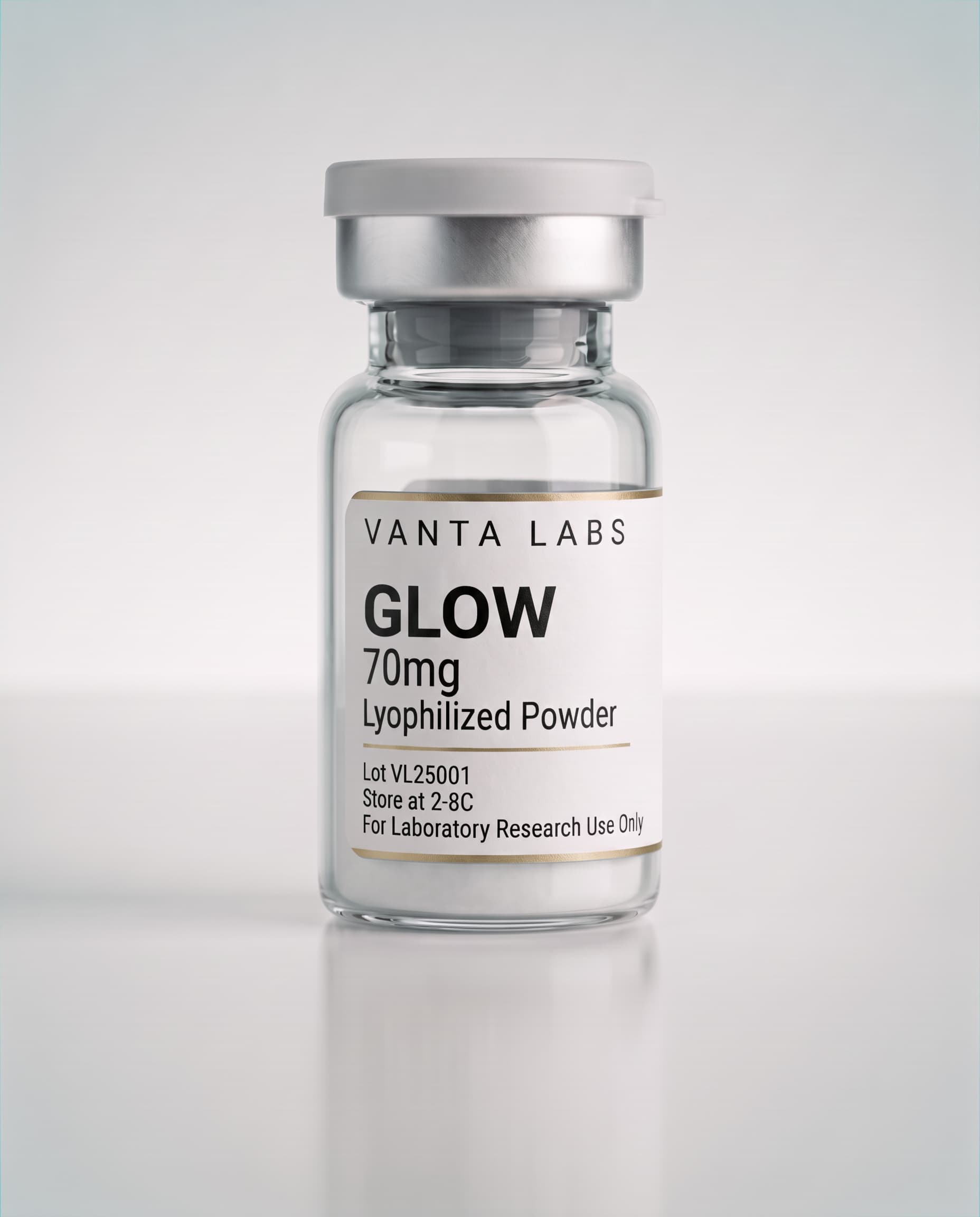
| GLOW | 70mg | 99.163% (blend average) | KVR-2026-153C34 | n/a |
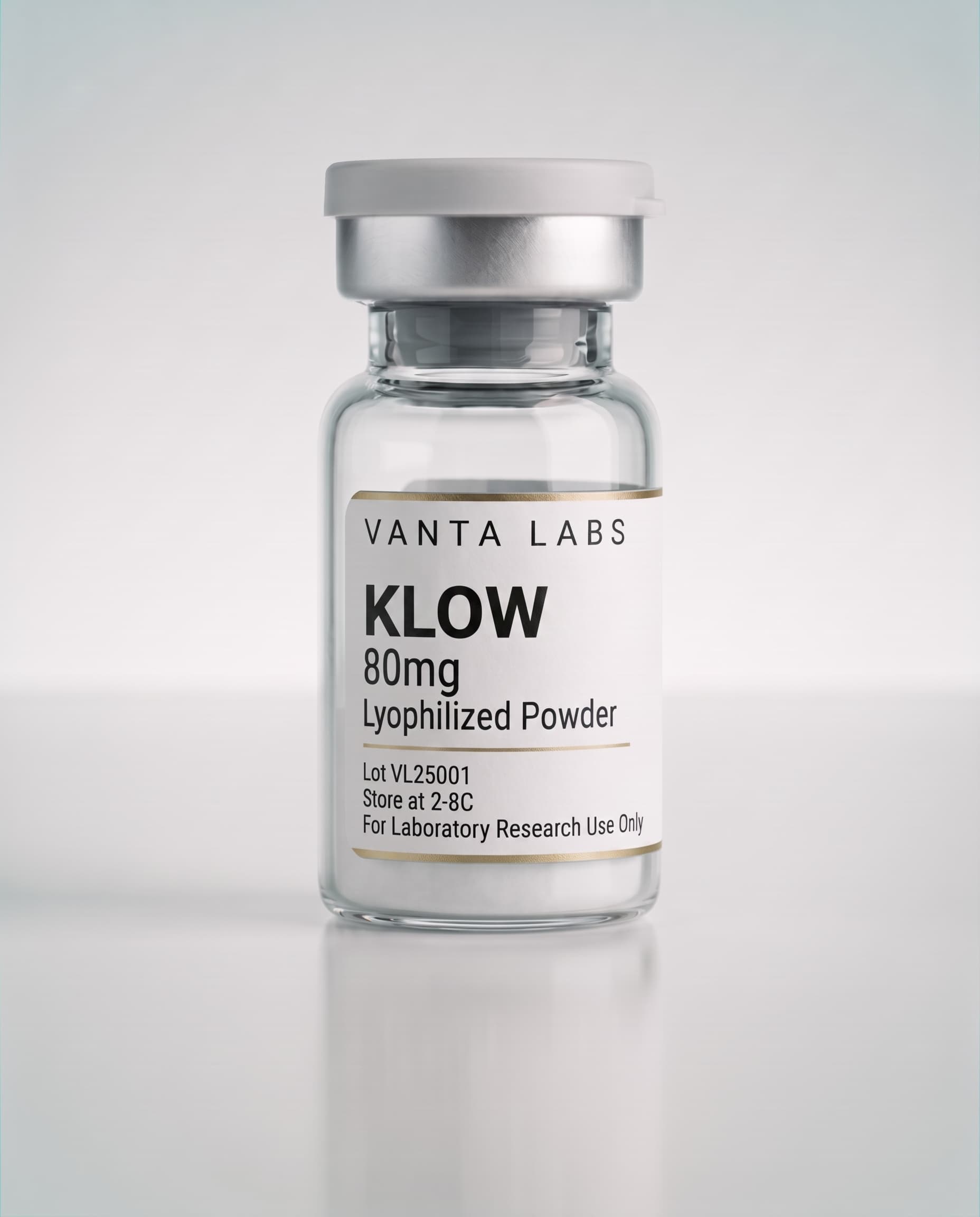
| KLOW | 80mg | None published | Reference report | n/a |
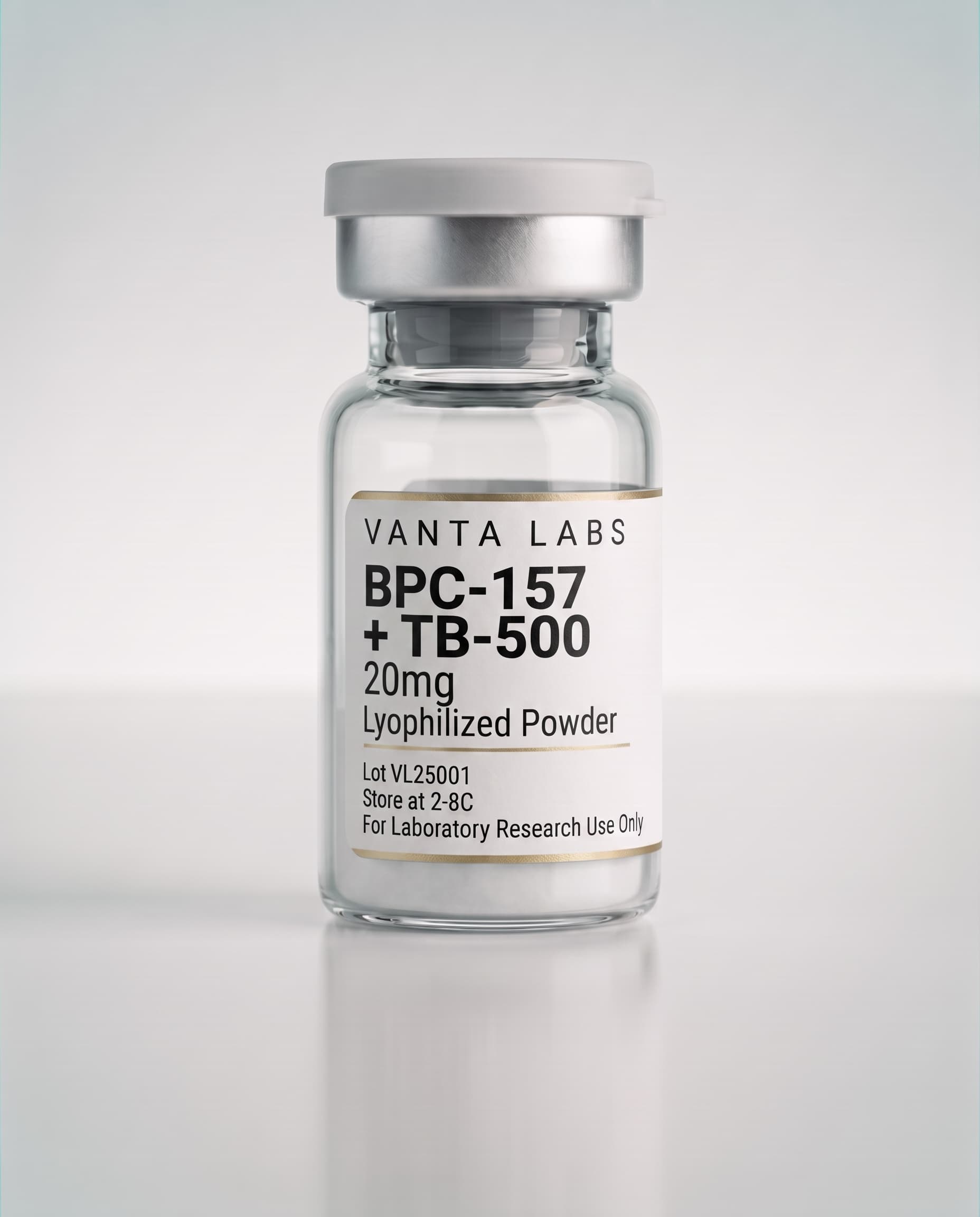
| BPC-157 + TB-500 | 20mg | 99.163% (blend average) | KVR-2026-47D7CA | n/a |
What a blend is, in supply terms
A blend is one vial holding more than one named peptide, lyophilized together, with the milligram amount of each component printed on the product page. The labelled size of a blend is the total across its components, which is why the sizes in this class look large next to the single-compound classes: an 80 mg vial is not 80 mg of one peptide.
The reason blends exist in a wholesale catalog is SKU count. A brand that wants three compounds on a shelf can carry one blend SKU instead of three single vials, with one label, one carton and one report to publish. That is a stocking and documentation decision rather than anything to do with what the material is for.
All three blends here are supplied as lyophilized powder in sealed vials, and all three are built from compounds we also know as single materials. GHK-Cu, BPC-157 and KPV are stocked as single vials in the peptides class; TB-500 we source to order rather than stock.
What we list in this class
One naming caveat is published on every page that touches it. The laboratory reports label one component TB-500 (TB-4). That name is used for more than one peptide related to thymosin beta-4, so the catalog asserts no sequence for it and quotes the report's own wording instead of improving on it.
The composition figures above are the ones on each product page, and they add up to the labelled total: 10 plus 10 plus 50 for GLOW, 50 plus 10 plus 10 plus 10 for KLOW, 10 plus 10 for BPC-157 + TB-500.
- GLOW - 70 mg total: BPC-157 10 mg, TB-500 (TB-4) 10 mg and GHK-Cu 50 mg. Published report at 70 mg, matched to the size listed.
- KLOW - 80 mg total: GHK-Cu 50 mg, KPV 10 mg, BPC-157 10 mg and TB-500 (TB-4) 10 mg. The published report prints no batch number, so it is shown as a reference report rather than a matched one.
- BPC-157 + TB-500 - 20 mg total: BPC-157 10 mg and TB-500 (TB-4) 10 mg. Published report at 20 mg, matched to the size listed.
- Also pre-combined, in another class: CJC-1295 + Ipamorelin is a two-peptide 10 mg vial, kept with the GHRH analogues and secretagogues because that is where buyers look for it.
What a blend report covers, and what it does not
Blend reports in this class come from Kovera Labs and print a blend average purity by RP-HPLC at 214 nm, identity by LC-MS, and a net content figure in milligrams against the labelled total. The published figures are 99.163% on the GLOW report, 99.163% on the BPC-157 + TB-500 report and 99.271% on the KLOW report, each quoted exactly as printed.
A blend average is one measurement across the contents of the vial. It is not a purity for each component, and no component-level figure should be inferred from it. The catalog labels it as an average everywhere it appears, including in the Published purity column above, precisely so the distinction survives being copied.
The KLOW report is published but shown as a reference report because it prints Batch: N/A, with no batch number to match a lot against. That is a limit of the document rather than a gap we paper over. As everywhere else in the catalog, no report establishes that its batch is the batch in current inventory: the quote names the lot you would receive and that lot's report, and each wholesale lot ships with its certificate of analysis.
Blends have no publication statistics page of their own, because the published literature is indexed by compound rather than by blend. The component compounds do: see BPC-157, GHK-Cu and KPV, with the hub at /research.
How to order blends
Each blend is listed at one size, so a blend line on your list is the blend and the number of vials. No prices are published and no minimum is published: send the list and we quote it.
Blends and single compounds belong on the same inquiry. A typical list is one or two blends plus the single peptides a brand wants alongside them, perhaps with items from GLP research too. One message, one quote, one lot assignment per line.
The reply names pricing, current availability, the lot and its report. Wholesale stock, white label and 3PL ship from Tampa Bay, Florida to the United States; a factory-direct order comes from the manufacturer and can ship internationally. How ordering works sets out the sequence, and testing and documentation sets out what arrives with a lot.
White label and 3PL for blends
Blends are the efficient way to open a brand: fewer SKUs, fewer labels, fewer reports to publish, and a shelf that still covers several compounds. White label puts your brand on the vial, the label and the carton from these lots. 3PL fulfillment stores your finished stock in Tampa Bay and ships it out under your brand.
Two things to settle when you ask. First, which blends you want to carry against which single compounds, since a blend and its components overlap on a shelf. Second, how you want the composition presented on your own label, given that the total and the per-component amounts are both facts your buyers will look for. Bring the blends, the vial counts and your label plan, and the quote confirms what is available.
Blends and components beyond the three listed
Three blends are what we hold. Blend components and related compounds are also available as single materials, some stocked and some sourced to order, and a blend that is not on this page is a question worth asking rather than assuming the answer to.
- Stocked as single vials: GHK-Cu at 50 mg, BPC-157 at 5 mg and 10 mg, KPV at 10 mg.
- Sourced to order as single vials: TB-500, and other single peptides such as LL-37, VIP, Humanin and ARA-290.
- Anything else, blend or single: ask in the inquiry. The answer comes back as a yes or a no with a quote attached. See everything we source.
Blends wholesale questions
Which blends do you supply wholesale?
GLOW, KLOW and BPC-157 + TB-500. The catalog shows part of what we have; ask for anything not listed and we source it.
Do these products have published laboratory reports?
2 of 3 have a published report that matches the product and size and prints an HPLC purity, shown on each card. Every wholesale lot comes with its certificate of analysis, and your quote names the lot you'll receive.
How do I get pricing?
Add products to your list, choose sizes and the number of vials, and send it on WhatsApp or by email. Sizes are the amount in one vial. Quantity is the number of vials you want. We reply with pricing, availability and the lot.
Are these for human use?
No. They are supplied for laboratory research use only. Not for human or veterinary use.
Does the labelled size mean that much of each peptide?
No. The size on a blend is the total across its components. KLOW is an 80 mg vial made of GHK-Cu 50 mg, KPV 10 mg, BPC-157 10 mg and TB-500 (TB-4) 10 mg, and each product page prints the breakdown.
What does blend average purity mean?
It is a single purity figure measured across the contents of the vial by RP-HPLC, not a figure for each component. No component-level purity should be read out of it. The catalog labels the figure as an average wherever it appears.
Why is the KLOW report a reference report?
Because the document prints Batch: N/A. With no batch number on the report there is nothing to match a lot against, so it is published as a reference report rather than as a matched one. The report is still linked in full.
Why is one component written as TB-500 (TB-4)?
That is how the laboratory report labels it. The name is used for more than one peptide related to thymosin beta-4, so the catalog quotes the report's wording and asserts no sequence for that component.
Can I order the components separately instead of as a blend?
Partly. GHK-Cu, BPC-157 and KPV are stocked as single vials. TB-500 as a single vial is sourced to order. All of them can sit on the same inquiry as the blends.
Can you make a blend that is not listed?
Ask in the inquiry. We do not publish a list of compositions we have not built, so the quote is the answer: it will say what is available, in what size, and what it costs.
Are blends supplied for human use?
No. Every blend here is supplied for laboratory research use only, not for human or veterinary use, and nothing on this site describes dosing, preparation or any outcome.
Research materials supplied by Vanta Foundry are for laboratory research use only. They are not for human or veterinary use and are not drugs, foods, cosmetics or dietary supplements. Websites and payment processing are business services for research-supply brands.
Get blends wholesale pricing.
Add products to your list and send it on WhatsApp or by email. A person on our team replies.